


 English
 Español
 عربى
عربى Deutsch
 русский
 Français
Why Dog & Cat Pet Toys Are Becoming Essential Health Tools for Modern Pet Care
Content
- 1 The Functional Boundary of Dog and Cat Toys Is Expanding from "Entertainment" to "Health Management"
- 2 Material Safety Standards Are Being Upgraded, with Eco-Friendliness and Durability Becoming Hard Procurement Criteria
- 3 OEM/ODM Remains the Dominant Model, but Intelligence and Customization Are Reshaping the Competitive Landscape
- 4 Procurement Decision Guide: How to Select High-Value Dog and Cat Toy Suppliers
- 5 Future Outlook: The Dog and Cat Toy Industry Is Moving Toward "Precision" and "Sustainability"
According to the latest data from Grand View Research, the global pet toy market reached USD 7.85 billion in 2024 and is projected to exceed USD 11.2 billion by 2030, with a compound annual growth rate (CAGR) of 6.1%. Dog and cat toys (Dog & Cat Pet Toy) collectively account for over 68% of total market volume, serving as the core category driving industry growth. As the global manufacturing hub for pet supplies, China contributes more than 45% of international pet toy supply, with particularly strong capabilities in engineering plastics, food-grade silicone, and eco-friendly plush materials.
From the consumption side, North America and Europe remain the two largest regional markets, accounting for 32% and 28% of global share respectively; however, the Asia-Pacific region is growing the fastest, with a CAGR of 8.3%, driven notably by the rise of China's domestic market. In 2023, the urban pet (dog and cat) consumption market in China reached RMB 279.3 billion, with toys and supplies representing approximately 12% of that total, and the share continues to climb.
The Functional Boundary of Dog and Cat Toys Is Expanding from "Entertainment" to "Health Management"
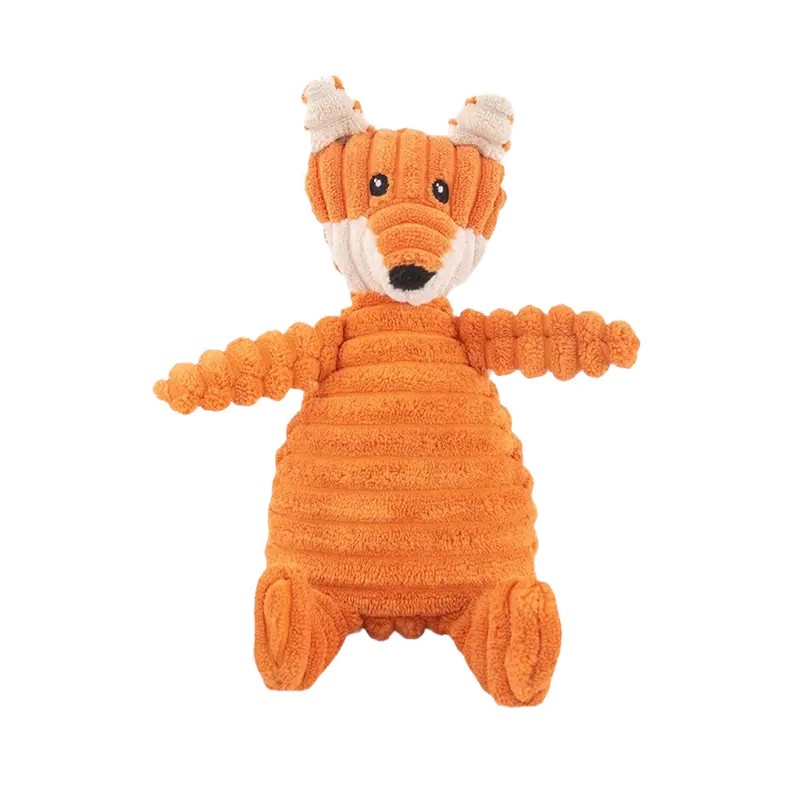
In traditional understanding, the core function of pet toys is recreation and amusement, but current industry trends show that toys are increasingly taking on health management roles. The American Veterinary Medical Association (AVMA) reported in 2023 that over 60% of canine obesity cases are directly linked to insufficient physical activity, while interactive toys (such as automatic ball launchers and tug ropes) can increase a dog's daily activity level by 35% to 50%.
Four Core Functional Values
- Physical Exercise: Chasing balls, tug-of-war ropes, and similar toys promote cardiovascular function and muscle strength, helping prevent obesity and joint diseases;
- Mental Stimulation: Diverse shapes and sound designs satisfy hunting instincts, relieve boredom and anxiety, and improve emotional stability;
- Cognitive Development: Puzzle toys challenge pets' cognitive abilities and slow memory decline in senior animals;
- Owner-Pet Bonding: Playing together deepens the emotional connection between owner and pet, enhancing the joy and satisfaction of pet ownership.
Taking cats as an example, indoor cats typically have a daily activity range of less than 50 square meters, and the lack of environmental enrichment often leads to behavioral issues. Studies show that after introducing electric teaser wands, maze feeders, and other toys, abnormal scratching behavior in cats decreases by 42%, and nighttime hyperactivity drops by 37%.
Material Safety Standards Are Being Upgraded, with Eco-Friendliness and Durability Becoming Hard Procurement Criteria
As the trend of pets becoming "family members" deepens, consumer attention to toy material safety has significantly increased. In 2024, the EU's revised REACH regulation tightened the phthalate limit in pet products from 0.1% to 0.05%, while the U.S. FDA's certification requirements for food-contact silicone have also become stricter. This means export-oriented manufacturers must establish more robust compliance systems in their material selection processes.
Mainstream Safe Materials and Their Application Scenarios
| Material Type | Core Characteristics | Applicable Toy Categories | Safety Certifications |
|---|---|---|---|
| Engineering Plastics (ABS/PP/PE) | High strength, impact-resistant, non-toxic | Chew toys, throwing balls | FDA / RoHS |
| Food-Grade Silicone | Soft, deformable, safe, odorless | Dental toys, soft-grip toys | FDA / LFGB |
| High-Density Plush and Cotton Rope | Skin-friendly comfort, anti-shedding process | Comfort plush toys, tug ropes | OEKO-TEX |
| Stainless Steel / Galvanized Metal Fittings | Rust-proof, corrosion-resistant, high load-bearing | Traction rings, bite rings | ISO 9001 |
Notably, degradable bio-based materials are emerging as a key trend. The application ratio of PLA (polylactic acid) and natural rubber in pet toys has risen from 3.2% in 2021 to 8.7% in 2024, and is projected to exceed 15% by 2030. For B2B buyers, proactively building supply chains around eco-friendly materials is not only a compliance necessity but also a strategic choice for brand differentiation.
OEM/ODM Remains the Dominant Model, but Intelligence and Customization Are Reshaping the Competitive Landscape
In the current global pet toy market, OEM (Original Equipment Manufacturing) and ODM (Original Design Manufacturing) models collectively account for 72% of B2B transaction volume. Chinese manufacturers leverage mature capabilities in injection molding, mold development, and supply chain integration to provide overseas brands with full-chain services from design prototyping to mass production. A typical collaboration cycle is: design confirmation (2-4 weeks) → mold development (3-5 weeks) → trial production and quality inspection (2 weeks) → bulk delivery (4-6 weeks).
Three Major Product Innovation Directions
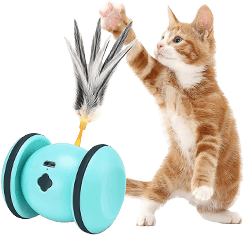
- Smart Interactive Toys: Built-in sensors and APP connectivity to record pet activity data and enable remote control; the smart pet toy segment reached USD 980 million in 2024;
- Customized Design: Developing exclusive product lines tailored to specific breed sizes and bite force differences; for example, thickened chew toys designed for large dogs have a destruction test pass rate of 92%;
- Functional Integration: Combining toys with oral cleaning and slow-feeding training functions; chew balls with textured bumpy surfaces have been shown to reduce dental plaque in dogs by 28%.
For buyers, selecting suppliers with ISO 9001 quality management systems and BSCI social responsibility certifications is the baseline for reducing trade risks. It is also advisable to prioritize suppliers with in-house mold development capabilities and material testing laboratories, as these directly determine product iteration speed and compliance stability.
Procurement Decision Guide: How to Select High-Value Dog and Cat Toy Suppliers
When facing numerous suppliers, B2B buyers should establish a systematic evaluation framework rather than relying solely on quotation sheets. The following core evaluation dimensions are based on industry best practices:
- Material Traceability: Can the supplier provide batch test reports and supplier qualification documents for raw materials;
- Product Testing Standards: Does the supplier have in-house testing capabilities for international standards such as ASTM F963 (Toy Safety) and EN 71;
- MOQ Flexibility: For startup brands, suppliers supporting small-batch trial orders of 500-1,000 units offer greater partnership value;
- On-Time Delivery Rate: The industry average on-time delivery rate is 82%, while top-tier suppliers can achieve 95% or higher;
- Design Collaboration Efficiency: The average cycle from concept sketch to 3D prototyping for excellent suppliers can be controlled within 10 working days.
Additionally, buyers are recommended to request third-party test reports (from SGS, Intertek, etc.) and sample destruction test videos before the first collaboration to verify actual durability and safety. For products targeting the EU market, it is essential to confirm that the supplier has completed REACH registration and can provide SCIP database notification support.
Future Outlook: The Dog and Cat Toy Industry Is Moving Toward "Precision" and "Sustainability"
Looking ahead five years, the dog and cat pet toy industry will present two definitive trends:
First, precision design. Based on pet behavioral data and AI algorithms, toys will be parametrically customized for different breeds, ages, and sizes. For example, low-impact chew toys designed for dogs over 7 years old have a hardness controlled between Shore A 40-50 degrees, satisfying chewing needs while protecting teeth. By 2028, the market share of precision-designed products is expected to grow from the current 5% to 18%.
Second, sustainable production. The circular economy concept will deeply penetrate the supply chain, including the use of recyclable materials, reuse of production waste, and end-of-life recycling programs. Currently, 23% of European and American pet brands have listed "carbon-neutral production" as a priority condition for supplier qualification, and this proportion is expected to grow by 5-7 percentage points annually.
For Chinese manufacturers at the core of the supply chain, capturing these two trends means a leap from "cost competition" to "value competition." Investing in smart production lines, establishing material innovation laboratories, and completing international certification systems will be the key chips for winning the next round of industry consolidation.
NEXT:Which Dog & Cat Feeding Bowl Manufacturing Model Will Dominate the $6.2B Market by 2035?
Interested in cooperation or have questions?



Whether you need a personalized product or a professional design, our team will bring your ideas to life. Together, let's create a world where pets thrive and are happy!
-
 No.13-1, Haikou Village, Xidian Town, Ninghai Country, Ningbo, China.
 -
 +86 13867893287
 -
 [email protected]
Copyright © Ningbo Welltrop Industrial Products Manufacturing Co., Ltd. All Rights Reserved. China Pet Supplies Manufacturers Wholesale Pet Products Factory
