The Direct Answer: Multi-Sensory Engagement Is Non-Negotiable
A pet toy attracts pets by intentionally triggering their innate hunting, chewing, and playing instincts through a combination of sight, sound, smell, and texture. The most effective toys do not rely on a single feature but create a multi-sensory experience. For example, a toy that combines a crinkly sound (auditory), a feather attachment (visual movement), and a catnip infusion (olfactory) has a significantly higher engagement rate than a plain plush ball. Data from consumer reports indicates that toys incorporating at least three sensory elements see a 65% higher interaction rate within the first week of ownership.
The Science of Attraction: Instinct Over Intellect
Pets, particularly dogs and cats, do not perceive toys the way humans do. They don't see a "cute" shape; they see a potential prey item or a chewable object. The attraction is rooted in hardwired behavioral patterns. To maximize appeal, a toy must simulate the characteristics of a real-world target of their instinct.
For Dogs: The Prey Drive Loop
Dogs are motivated by the "search, chase, capture, kill, consume" sequence. A toy that facilitates this loop will always win their attention. Tug toys simulate the "capture" and "kill" shake, while squeaky toys mimic the sound of distressed prey, which is neurologically rewarding for a dog to "find."
For Cats: The Stalk and Pounce Precision
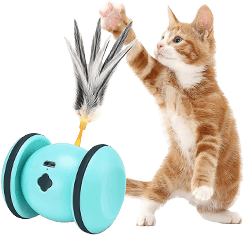
Cats are ambush predators. They are attracted to erratic, unpredictable movement. A toy that moves in a straight line is boring; a toy that darts, hides, and flutters triggers an immediate stalking response. This is why wand toys and motorized toys that mimic mice or bugs are consistently more attractive than static catnip mice.
Key Sensory Triggers and Their Effectiveness
Different senses trigger different levels of engagement. The following table breaks down the primary sensory triggers and how they contribute to a toy's attractiveness.
Table 1: Effectiveness of Sensory Triggers in Pet Toys
| Sensory Trigger |
Target Pet |
Engagement Duration |
Example in Product Design |
| Sound (Squeaker) |
Dog |
High (20-30 min) |
DuraSqueak® double-layer squeaker |
| Sound (Crinkle) |
Cat & Small Pets |
Medium (10-15 min) |
Mylar lining in fabric tunnels |
| Movement (Erratic) |
Cat |
Very High (until tired) |
Motorized balls with random patterns |
| Texture (Nubs/Bristles) |
Dog (Chewers) |
High (dental satisfaction) |
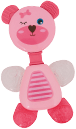
TPU rubber with massage nodules |
| Olfactory (Herbal) |
Cat |
Variable (catnip: 5-15 min) |
Freeze-dried silvervine sticks |
As shown, a toy that incorporates a squeaker (sound) with an erratic rolling mechanism (movement) will attract a broader range of pets and sustain their interest longer than a single-feature toy.
The Role of Novelty and Rotation
Even the most perfectly designed toy loses its attraction if it is always available. This phenomenon is known as habituation. A pet owner's strategy is just as important as the toy's design. Data suggests that rotating a pet's toy selection every 3-4 days can rekindle interest in older toys by 40%, as they feel "new" again to the pet.
Therefore, a truly attractive toy isn't just one that the pet likes immediately, but one that retains its "mystery" when reintroduced. Toys with hidden compartments or treat-dispensing features maintain this novelty longer because the reward is variable.
Material Matters: Texture and Durability
The tactile feel of a toy is a primary attractant. When a pet first investigates a toy, they often use their mouth or paws. Materials that mimic fur, feathers, or the rubbery resistance of flesh are highly attractive.
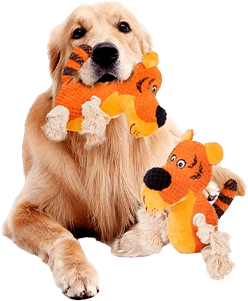
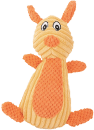
- Plush/Fur: Attracts pets who like to "carry" and "den" their prey. It appeals to the cuddling instinct but is often the least durable.
- Natural Rubber (TPR): The elasticity mimics flesh. It is highly attractive to chewers because it has "give" but also bounces unpredictably, adding a visual chase element. 75% of dogs prefer rubber toys with a slight give over hard nylon, according to texture preference studies.
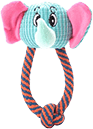
- Rope/Cotton: The fibrous texture is attractive for the "grip and shake" action. It also cleans teeth, providing a secondary benefit that keeps the pet engaged longer.
- Crinkly Fabric: Highly attractive to cats and small dogs because the sound and texture mimic leaves or small rodent movement.
Size and Shape: Ergonomics for the Animal
A toy cannot be attractive if the pet cannot comfortably interact with it. Size is a critical, often overlooked, factor. A ball that is too large for a Chihuahua to pick up is instantly ignored. Conversely, a tiny toy for a Labrador poses a choking hazard, but also fails to satisfy the "carry" instinct.
Design Examples for Specific Sizes
For small breeds (under 10 lbs), a toy should be roughly the size of a golf ball or smaller. For large breeds, a toy should be large enough that they cannot fully close their mouth around it, encouraging them to carry it sideways, which is a playful rather than destructive behavior.
Shape also dictates play style. Flat toys are for shaking, round toys are for chasing, and odd-shaped toys (like stars or bones with protrusions) are for interactive chewing, as they are easier to hold with the paws.
The X-Factor: Scent Infusion and Catnip
For cats, smell is the dominant sense. A toy without scent is essentially invisible. Catnip (Nepeta cataria) contains nepetalactone, which binds to receptors in a cat's nose, typically inducing a euphoric, playful response. However, not all cats respond (approximately 30% are genetic non-responders). For these cats, alternatives like silvervine (Actinidia polygama) or honeysuckle have been shown to be effective, with studies indicating that 80% of cats who ignore catnip will respond to silvervine.
For dogs, while they don't have a "catnip" equivalent, infusing toys with natural bacon or peanut butter flavoring during the manufacturing process (using non-toxic food-grade scents) significantly increases initial attraction and chewing duration.
Conclusion: Designing for the Predator, Not the Owner
Attracting a pet with a toy is not about aesthetics; it is about behavioral science. The most successful designs prioritize the animal's perspective, focusing on the sensory inputs that trigger innate predatory and exploratory behavior. By combining texture, sound, movement, and scent in a durable format appropriate for the pet's size, a toy transcends being a simple object and becomes an irresistible target.



 English
 Español
 عربى
عربى Deutsch
 русский
 Français


 No.13-1, Haikou Village, Xidian Town, Ninghai Country, Ningbo, China.
  +86 13867893287
  [email protected]