


 English
 Español
 عربى
عربى Deutsch
 русский
 Français
How stable is the cat climbing frame?
Content
- 1 What Makes the Base and Frame Stable
- 2 Why Some Cat Trees Wobble or Tip Over
- 3 Cat Climbing Frame Product Range
- 4 Comparing Stability Across Frame Types
- 5 How to Test Stability Before You Buy or Place an Order
- 6 Placement Also Affects Perceived Stability
- 7 Frequently Asked Questions About Frame Stability
- 8 What to Confirm When Sourcing From a Manufacturer
A properly built cat climbing frame is stable enough to hold multiple adult cats jumping at once, provided it has a thickened anti-slip base, a high-density board core, and reinforced internal joints. The wobble that owners complain about almost never comes from the cat's weight itself — an average cat lands with roughly 3 to 5 times its body weight in force during a jump, which a well-engineered frame is designed to absorb. Instability usually traces back to three causes: a base that is too light relative to the tower's height, particleboard cores that were not compressed to a high enough density, or connectors that loosen after repeated vibration. Below, this guide breaks down what actually keeps a climbing frame steady, how different structural types compare, and what to check before placing an order with a manufacturer.
What Makes the Base and Frame Stable
Stability starts at the bottom. A base that covers a wide footprint relative to the tower's total height lowers the center of gravity and resists tipping when a cat leaps from the top platform. Most reliable designs use a base thickness of around 18 to 25mm in high-density board, paired with a non-slip rubber or felt underside that grips hardwood, tile, or carpet without sliding.
| Structural Element | Stability Function | Typical Spec |
| Base board | Lowers center of gravity, resists tipping | 18–25mm high-density board |
| Anti-slip pad | Prevents sliding on smooth floors | Rubber or felt underside |
| Support columns | Carries vertical load between levels | Solid wood or reinforced cardboard tube core |
| Connector hardware | Locks platforms to columns without loosening | Threaded steel bolts, not friction-fit pegs |
| Sisal wrap | Adds grip and scratching surface, indirectly reduces sway | Natural sisal rope, tightly wound |
Manufacturers that control raw material quality closely, such as using high-density board rather than hollow chipboard, are able to deliver a frame that keeps its shape and load-bearing capacity even after years of daily jumping and scratching.
Why Some Cat Trees Wobble or Tip Over
Three failure points account for most of the stability complaints reported by pet owners. First, an undersized base — when the base footprint is much smaller than the tower's height, the structure becomes top-heavy and a single hard landing can cause it to rock. Second, low-density or hollow board cores, which compress or crack under repeated impact and gradually loosen the screw holes that hold platforms together. Third, friction-fit assembly instead of threaded fasteners, which works fine on day one but loosens noticeably within a few weeks once a cat starts using the frame daily.
A frame built with a thickened base and anti-slip design is engineered specifically to stay steady even when multiple cats are playing on it simultaneously, since the internal support structure is reinforced to avoid deformation or loosening from long-term use.
Cat Climbing Frame Product Range
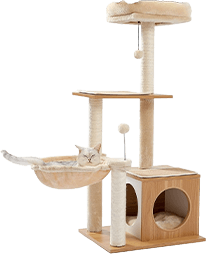
A look at the structural variety available across multi-level houses, plush condos, and wooden towers, each engineered around the same stability principles described above.
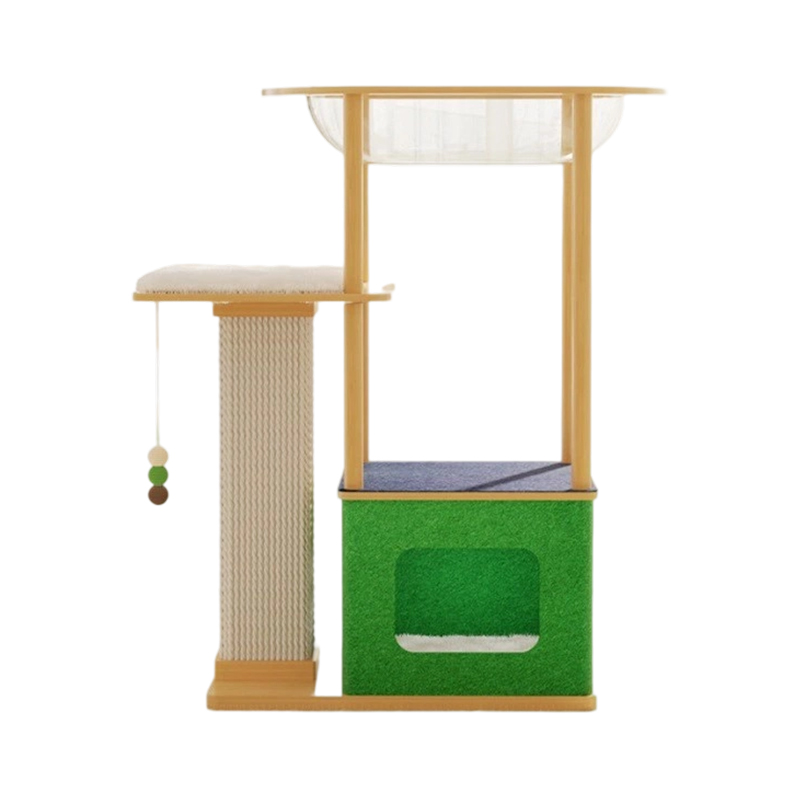
Indoor Cat Climbing Frame House
Multi-Level House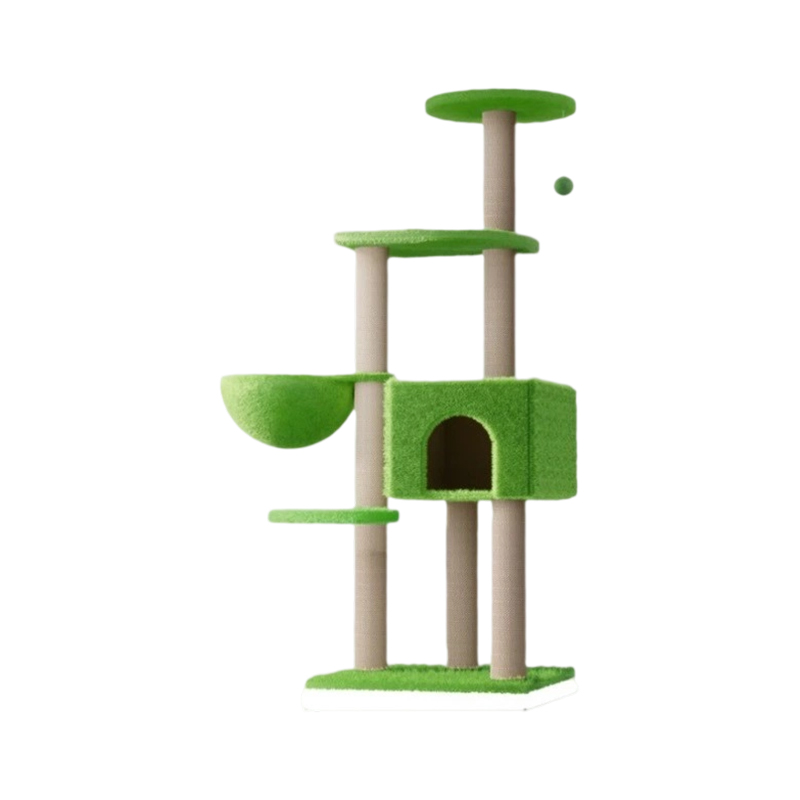
Indoor Cat Plush Climbing House
Plush Condo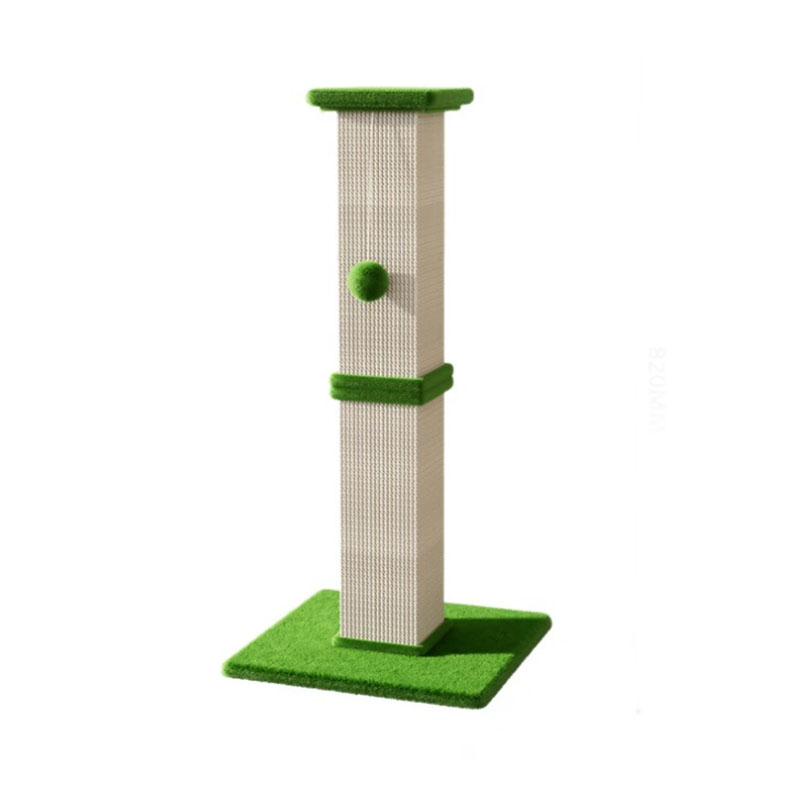
Cat Pet Wooden Climbing Frame
Wooden Tower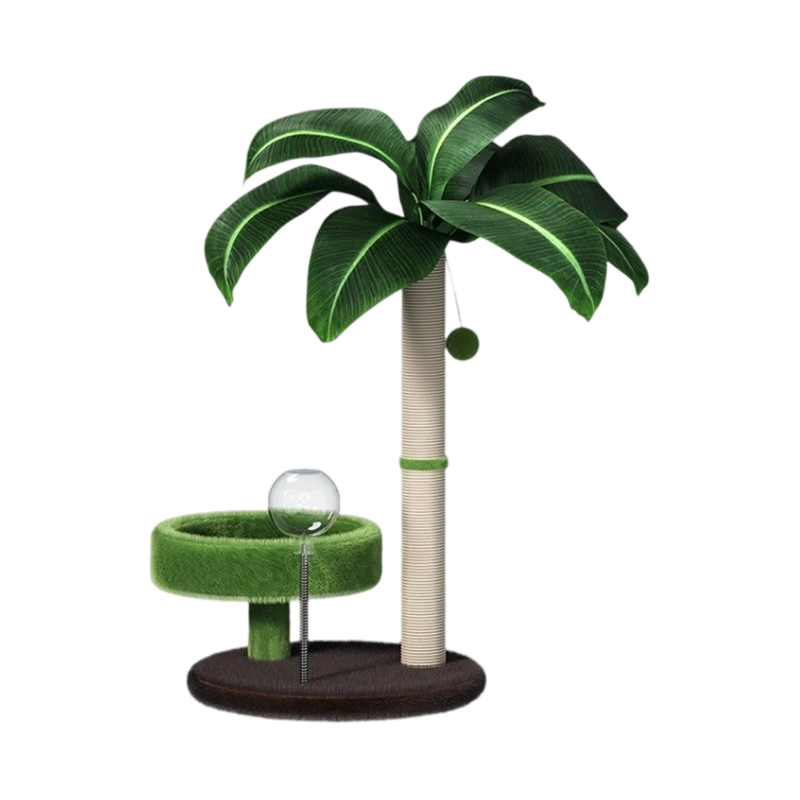
Indoor Cat Climbing Tree
Climbing Tree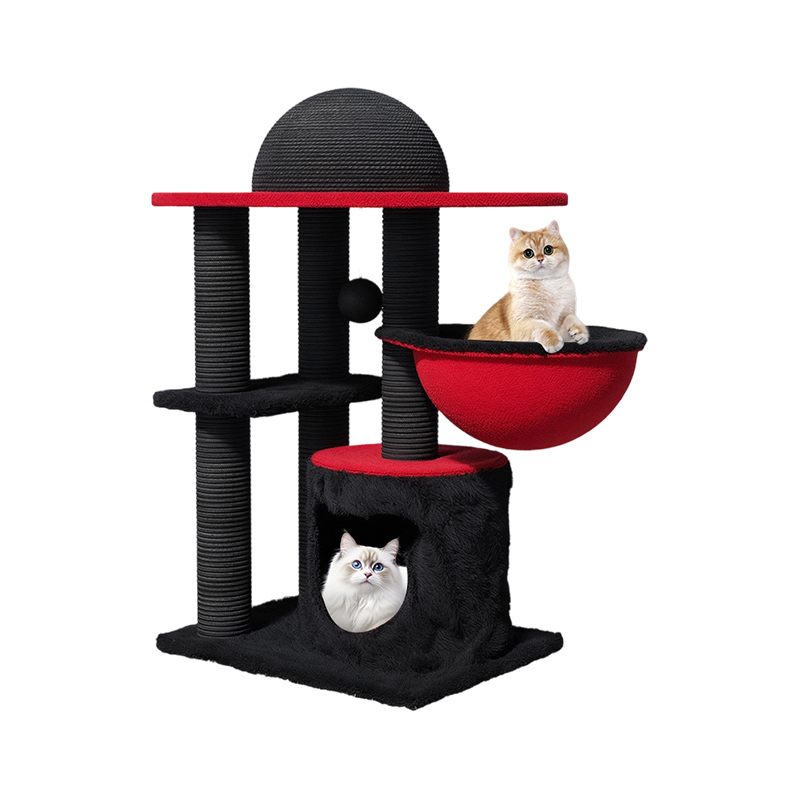
Multi-Level Cat Climbing Frame Furniture
Vertical FurnitureComparing Stability Across Frame Types
Different structural categories trade off stability, footprint, and price differently. Picking the right type for a cat's size and a household's number of cats matters as much as material quality.
| Frame Type | Relative Stability | Best Suited For |
| Fixed multi-level tower | High — wide base, lowest center of gravity | Multiple cats, active jumpers |
| Plush condo house | High — heavier padded base anchors the frame | Senior cats, kittens needing soft landings |
| Wooden scratcher tree | Medium to high — depends on board density | Owners wanting a furniture-like finish |
| Wall-mounted bridge shelving | High once anchored, but depends entirely on wall fixing | Small apartments, vertical space-saving |
| Tall single-column tower | Lower without a wide base — needs reinforced footing | Single cat, narrow floor space |
How to Test Stability Before You Buy or Place an Order
A few quick checks reveal whether a climbing frame will hold up over months of daily use. Press down firmly on the top platform and watch whether the base lifts on one side; any visible tilt signals an undersized footprint. Push the tower sideways at the midpoint — a stable structure should barely shift, while a wobbly one will sway noticeably even under light pressure. Check whether platforms are secured with screws and connector hardware rather than friction-fit dowels, since threaded fasteners hold their grip far longer under repeated vibration from jumping.
For buyers sourcing in bulk, requesting the board density specification and connector type from the manufacturer before production is the most reliable way to confirm long-term stability, rather than relying on photos alone.
Placement Also Affects Perceived Stability
Even a well-built frame can feel unstable if it is placed on an uneven floor, a thick shag rug that lets the base sink unevenly, or pushed against a wall at an angle. Setting the frame on a flat, hard surface and keeping all four (or more) base contact points level removes most of the wobble that owners mistake for a manufacturing defect. Placing the unit in a quiet corner away from heavy foot traffic also reduces accidental bumps that can shift a base over time.
Frequently Asked Questions About Frame Stability
Does a heavier cat climbing frame mean a more stable one? Not always — weight matters less than how that weight is distributed. A frame with a wide, dense base and a narrower upper structure will outperform a heavy frame with a small footprint.
Can stability be improved after assembly? Yes, tightening all connector screws every few months and adding a non-slip mat underneath the base are the two most effective fixes for an existing unit that has started to wobble.
Is sisal rope wrapping relevant to stability? Indirectly — tightly wound sisal rope adds rigidity to the support columns themselves, in addition to its main role as a scratching surface.
What to Confirm When Sourcing From a Manufacturer
Buyers working with a China cat climbing frame manufacturer for OEM or ODM production should request documentation on board density, base thickness, and connector hardware type, since these three specifications determine stability far more than surface finish or color. A factory capable of one-stop production — covering injection molding, metal processing, and sewing in the same facility — typically delivers more consistent structural quality across a full order, because the frame, support posts, and padding are produced and quality-checked under one roof rather than assembled from mismatched third-party parts.
NEXT:Should I shave my dog in summer?
Interested in cooperation or have questions?







Whether you need a personalized product or a professional design, our team will bring your ideas to life. Together, let's create a world where pets thrive and are happy!
-
 No.13-1, Haikou Village, Xidian Town, Ninghai Country, Ningbo, China.
 -
 +86 13867893287
 -
 [email protected]
Copyright © Ningbo Welltrop Industrial Products Manufacturing Co., Ltd. All Rights Reserved. China Pet Supplies Manufacturers Wholesale Pet Products Factory
