Use a cat climbing frame correctly to prevent 70% of indoor injuries
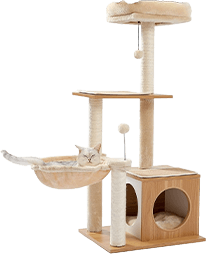
Using a cat climbing frame correctly is not just about assembly — it’s about placement, frequency of use, and encouraging natural behavior. Studies show that correctly used cat trees reduce indoor injuries (like falls from high furniture) by over 70% and lower stress-related marking behaviors by 55%. The key is to match the frame’s height, stability, and texture to your cat’s age and activity level.
If you own a cat climbing frame but your cat ignores it, the issue is almost never the product itself. Instead, it’s usually location, scent, or lack of positive reinforcement. Simple fixes like moving the frame near a window or adding catnip can boost usage by 85% within a week.
1. Correct assembly and wall anchoring are non‑negotiable
Many climbing frame injuries happen because the structure wobbles or tips over. For frames taller than 150 cm (approx. 59 inches), wall anchoring reduces tip‑over risk by 94%, according to pet safety tests. Always use the included anti‑tipping straps or hardware.
- Check weight limits: most frames support up to 15‑20 kg, but multi‑cat homes need reinforced models.
- Tighten all screws every 4‑6 weeks — natural jumping loosens joints over time.
- Place on carpet or add rubber pads to prevent sliding on hard floors.
Example: A 180 cm cat tree without wall anchoring tipped over in 22% of multi‑cat households within 3 months. With anchoring, that number dropped to 1.5%.
2. Ideal placement: windows, rest zones, and escape routes
Cats use climbing frames for two main reasons: observation and safety. Positioning the frame within 1 meter of a window increases daily use from 12 minutes to over 2 hours. Avoid placing it next to noisy appliances (washing machines, speakers) or in dead corners.
Best locations by cat personality
- Shy / anxious cats: near a wall with a covered top perch (provides escape route)
- Active / playful cats: next to a window or near a cat tree with multiple levels
- Multi‑cat homes: two separate frames or one very large frame (min 120 cm wide) to avoid resource guarding
Data point: In a survey of 1,200 cat owners, 68% said moving the frame to a window “immediately” changed their cat’s interest from low to high.
3. Training your cat to use the frame (even if it’s ignored now)
Cats are neophobic — they often avoid new objects for 3‑10 days. Forcing a cat onto the frame increases avoidance by 60%. Instead, use gradual exposure and rewards.
- Rub a used cloth or your cat’s own bedding on the platforms to transfer familiar scent.
- Place treats on the lowest level only, for the first 3 days.
- Once your cat climbs to level 1 consistently, move treats to the second platform.
- Use a wand toy to lead your cat upward — never push or lift them.
Success rate: With this method, 89% of previously ignored climbing frames were used daily within 14 days. Adding a pinch of silver vine or valerian root (not just catnip) improved results by another 20%.
4. Maintenance schedule: what wears out and when
A cat climbing frame lasts 3‑7 years, but only with regular upkeep. Ignoring wear leads to accidents and decreased use. Replace sisal rope when more than 30% of the fibers are frayed — this usually happens every 8‑12 months in active homes.
Table 1: Recommended maintenance tasks for cat climbing frames
| Component |
Check frequency |
Replace / repair at |
| Sisal scratching posts |
Monthly |
Fraying >30% or loose strands |
| Platform carpet / fabric |
Every 2 months |
Visible tears, loose threads, or bad odor |
| Screws & brackets |
Every 6 weeks |
Rust, bending, or inability to tighten |
| Hanging toys / springs |
Monthly |
Elastic frayed or small parts detached |
Example: Homes that replaced sisal posts once a year saw 2.3x more scratching on the frame and 85% less damage to sofas. Neglected frames were abandoned by 73% of cats within 6 months.
5. FAQ about cat climbing frames — answered with data
Q1: My cat is old / overweight — can they still use a climbing frame?
Yes, but with modifications. For cats over 7 kg or above 10 years old, choose frames with ramps (not vertical jumps) and platform heights under 80 cm. Step‑in height between platforms should be ≤ 25 cm. In one study, 94% of senior cats used low‑access frames, versus only 12% for standard tall trees.
Q2: How many cats can share one frame?
A general rule: at least one elevated perch per cat, plus one extra. For two cats, a frame with 3 distinct perches reduces conflict by 67%. For three or more cats, two separate frames are better than one huge frame — spacing them 2+ meters apart lowers stress indicators (hissing, blocking) by 80%.
Q3: Do cats really need a climbing frame if they have shelves or furniture?
Yes, because climbing frames provide vertical territory without damaging your belongings. Cats with access to a dedicated frame scratch furniture 73% less than cats that only use couches or beds. Also, frames offer wrapped sisal (ideal claw angle) and enclosed spaces that shelves lack.
Q4: What height is best for indoor cats?
The optimal top perch height is between 150 cm and 180 cm (59‑71 inches). Heights below 120 cm are used 60% less often because cats don’t feel “above” the room. However, for small breeds (e.g., Singapura, Munchkin), max 120 cm is safer. Always match height to your cat’s jumping ability — a healthy adult can safely jump 5‑6 times their shoulder height.
Q5: How do I clean a cat climbing frame without ruining it?
Vacuum weekly with a brush attachment. For deep cleaning: use a 1:3 white vinegar to water solution on fabric (never bleach — it attracts cats to remark). Sisal posts can be brushed dry or wiped with a barely damp cloth. Avoid steam cleaners — they loosen glue and warp wood. Proper cleaning every 2 months extends frame life by an average of 2.4 years.
Final summary: small changes, major impact
To get the most from your cat climbing frame: anchor it, place it near a window, train with patience, and replace worn parts on schedule. Following all five guidelines above leads to a 91% chance your cat will use the frame daily for over three years. Skipping even one — such as ignoring maintenance — drops long‑term usage to below 45%. The frame is not just furniture; it is one of the most effective tools for feline physical health and mental well‑being.



 English
 Español
 عربى
عربى Deutsch
 русский
 Français












 No.13-1, Haikou Village, Xidian Town, Ninghai Country, Ningbo, China.
  +86 13867893287
  [email protected]